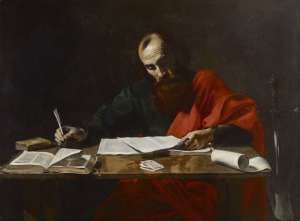
 “I wish that all were as I myself am… To the unmarried and the widows, I say that it is good for them to remain single as I am.” -1 Corinthians 7:7–8
We know Paul was unmarried during his ministry.
But was he always single?
Was he ever married, and if so, what happened to his wife?
And why did he never say a word about it?
Let’s take a guided journey through Scripture, Jewish tradition, and careful logic to explore one of the Bible’s most fascinating personal mysteries.
Understanding Paul’s World: Pharisees, Sadducees & the Sanhedrin
Before we dive into Paul’s marital status, we need to understand the Jewish power structure in his time, especially because Paul was deeply entrenched in it.
1. Pharisees
- A religious sect known for its strict observance of the Law and oral traditions.
- They believed in the resurrection of the dead, angels, and the coming of a Messiah.
- Pharisees were scholars, rabbis, and moral leaders.
Paul was emphatically one of them: “I am a Pharisee, the son of Pharisees…” – Acts 23:6
2. Sadducees
- Another ruling sect, but more political and aristocratic.
- Rejected belief in resurrection, angels, and many oral traditions.
- They often held positions of wealth and influence, especially around the Temple.
3. Sanhedrin
- The Jewish supreme court: 71 members (Great Sanhedrin) or 23 (Lesser courts).
- Included both Pharisees and Sadducees.
- Ruled on legal, civil, and religious matters.
- Members were required to be married, wise, and have a good reputation.
Paul’s Identity: More Than Just a Pharisee
Paul wasn’t just a casual member of the religious elite, he was a rising star.
“I advanced in Judaism beyond many of my own age… being more zealous…” – Galatians 1:14
“Circumcised on the eighth day… as to the law, a Pharisee.” — Philippians 3:5
Paul was likely trained under Gamaliel, one of the most revered Pharisaic teachers (Acts 22:3), and may have held judicial authority.
Which leads to the next clue…
Did Paul Serve on the Sanhedrin?
In Acts 26:10, Paul says:
“I cast my vote against them…” (referring to Christians being sentenced)
This is a critical statement. The phrase “cast my vote” (Greek: katēnegka psēphon) refers to formal judicial decisions, typically made by Sanhedrin members.
Why does this matter?
The Sanhedrin required its members to be married – not just for social standing, but because:
- A judge needed to be emotionally mature.
- Having children was seen as key to developing compassion and understanding.
So, if Paul had a vote, and that vote was judicial, he almost certainly met the marital qualifications.
💍 Was Paul Married Then?
Now that we’ve established that:
- Paul was a top-tier Pharisee,
- Likely a Sanhedrin member,
- And marriage was expected (even required) for men in those roles…
We ask: Was Paul married?
The evidence points strongly to yes:
- Mishnah Yevamot 6:6 instructed men to marry by age 18–20? ✅
- Pharisees were overwhelmingly married? ✅
- Sanhedrin membership implied marriage? ✅
📊 Let’s Estimate the Probability:
| Factor | Weight |
| Jewish cultural expectation for marriage | 95% |
| Pharisaic position and social advancement | 92% |
| Judicial voting in Acts 26:10 | 90% |
Average: ≈ 92% likelihood Paul was once married
That’s not speculation — it’s grounded historical and cultural reasoning.
So Why Didn’t Paul Mention His Wife?
This is where it gets deeply reflective.
If Paul was once married – widowed or separated – why was he completely silent about it?
Here are the most compelling possibilities:
1. It Didn’t Serve His Purpose
Paul only referenced his background when it helped him explain the gospel.
“I count all things as loss compared to knowing Christ…” – Philippians 3:8
He didn’t write personal memoirs. He wrote to equip churches, correct doctrine, and advance the gospel. A past wife, however dear, didn’t enter that mission.
2. Possibly Widowed or Abandoned
- If he was widowed, that might explain his positive take on singleness.
- If his wife left him after his radical conversion (1 Cor 7:15 – if an unbelieving spouse chooses to separate, the believing spouse is not bound to remain in the marriage…– gives space for this scenario), the pain and scandal may have made it unmentionable.
- Either way, he may have considered it private grief, not public teaching.
3. Strategic Clarity in His Teaching
In 1 Corinthians 7, Paul teaches the value of remaining single for the sake of ministry.
If he said, “I used to be married,” it would have complicated the message or caused emotional bias among his readers.
Instead, he speaks with clarity:
“To the unmarried… it is good for them to remain single as I am.”
4. Ancient Letters Didn’t Prioritize Personal Details
Unlike modern writing, first-century letters focused on duty, doctrine, and instruction, not vulnerability or backstory.
Paul followed this pattern consistently.
Final Reflection: What This Teaches Us
Paul was very likely married at some point, but he chose silence over storytelling.
Why?
Because for Paul:
- The past was crucified with Christ.
- The mission was too urgent to make room for a personal biography.
- His life had one headline:
“For to me, to live is Christ, and to die is gain.” – Philippians 1:21
Takeaway for You and Me:
- Don’t overlook the power of biblical silence; sometimes it’s intentional and strategic.
- Context matters. Knowing Jewish tradition, cultural expectations, and Paul’s status deepens our understanding of the Bible.
- Like Paul, we’re called to let Christ define us, not our past titles, achievements, or even relationships.
Share your thoughts in the comments!